The Role of Sports Massage in Injury Rehabilitation
Published by Perfect Balance Rehabilitation Centre, Abu Dhabi. Medical review required before publication.
Sports massage may support injury rehabilitation by reducing short-term soreness, easing perceived muscle tightness and improving flexibility in some people. It should complement—not replace—an appropriate assessment, progressive exercise, strength development and return-to-sport planning. The safest timing and pressure depend on the injury and its stage of recovery.
This guide is for athletes, runners, gym users and active adults considering sports massage for injury recovery in Abu Dhabi.
Key Takeaways
- Sports massage works primarily on muscles and other soft tissues.
- It may help with post-exercise soreness, muscle tension and short-term flexibility.
- It is not proven to repair a torn muscle, ligament or tendon faster by itself.
- An acute or unexplained injury should be assessed before direct, forceful massage.
- Exercise-based rehabilitation usually remains central to rebuilding strength and capacity.
- Treatment should be adjusted to the injury, healing stage, activity and personal goals.
What Is Sports Massage?
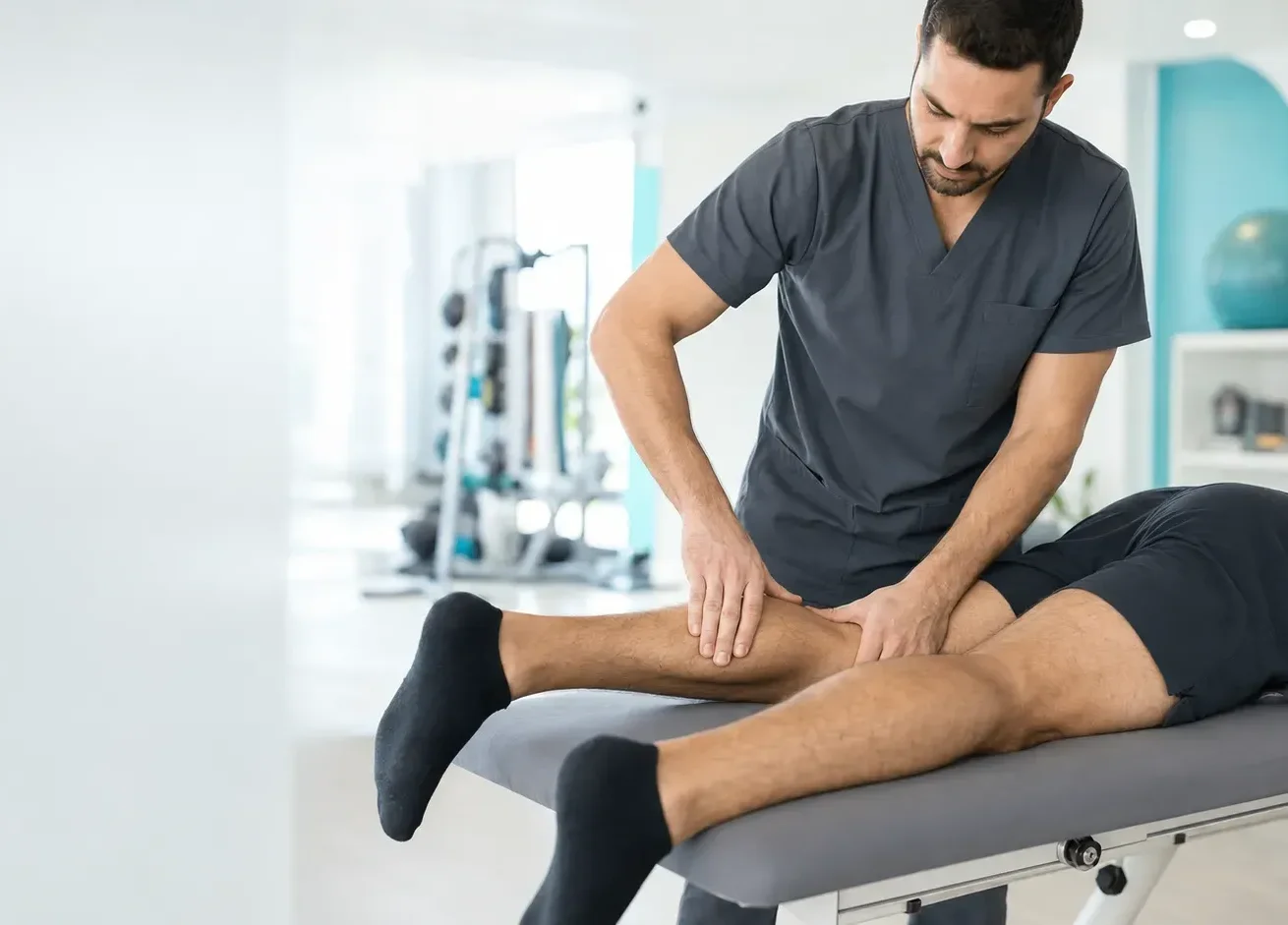
Sports massage is a targeted form of soft-tissue treatment adapted to a person’s activity, symptoms and recovery goals. It may use different levels of pressure, soft-tissue techniques, movement and stretching according to the assessment and the person’s comfort.
Despite its name, sports massage is not limited to professional athletes. Recreational runners, padel players, cyclists, gym users and people returning to exercise may also consider it. Deep pressure is not automatically more effective; the appropriate technique depends on tissue sensitivity, clinical findings and the stage of recovery.
Learn more about sports massage in Abu Dhabi and how the service is provided at Perfect Balance.
What Does a Sports Massage Therapist Do During Rehabilitation?
A sports massage therapist does more than apply pressure to a painful area. Within the professional’s scope of practice, a responsible appointment may include the following steps:
- Ask how and when the symptoms started.
- Review the activity or training that aggravates them.
- Screen for signs that require medical or physiotherapy assessment.
- Examine relevant movement, tenderness and muscle sensitivity.
- Decide whether massage is appropriate at the current stage.
- Select techniques and pressure according to comfort and clinical findings.
- Monitor how the person responds during and after treatment.
- Coordinate massage with rehabilitation exercises where appropriate.
The therapist should not assume that every painful area is simply a “tight muscle”. Pain may arise from a muscle, tendon, ligament, joint, nerve or another structure, and different problems require different management.
How May Sports Massage Support Injury Rehabilitation?
Managing post-exercise soreness
Massage may modestly reduce delayed-onset muscle soreness after strenuous exercise. This can make movement feel more comfortable during the recovery period.
Post-exercise soreness is not necessarily an injury. It often appears after unfamiliar or intensive activity, while an injury may involve a specific incident, loss of function, substantial swelling or persistent pain.
Reducing the feeling of muscle tightness
Some people experience a temporary reduction in stiffness or sensitivity after treatment. This may make it easier to perform rehabilitation exercises, although the underlying cause still needs to be addressed.
Supporting short-term flexibility
Sports massage may produce small, short-term improvements in flexibility. This can be useful when restricted movement is interfering with exercise, but lasting mobility changes usually require repeated movement, strength work and activity-specific training.
Helping someone return to movement confidently
Hands-on treatment may help a person feel more comfortable moving an affected area. When appropriate, it can be followed by exercises that rebuild strength, control and tolerance.
Supporting recovery between training sessions
Massage can be incorporated into a broader recovery plan alongside sleep, nutrition, hydration, appropriate training load and rest. It cannot compensate for excessive training or insufficient recovery.
What Does the Research Say?
A systematic review and meta-analysis involving 29 studies and 1,012 participants found no evidence that sports massage directly improved strength, sprinting, jumping or endurance. It identified small improvements in flexibility and delayed-onset muscle soreness, although the size of these effects was generally modest. Read the research abstract on PubMed.
The US National Center for Complementary and Integrative Health notes that massage may provide short-term relief for some types of pain, while the strength and quality of evidence vary by condition. It also advises people not to use massage to postpone seeing a healthcare provider about a medical problem. See the NCCIH massage evidence and safety overview.
The responsible conclusion is that sports massage may be a useful supportive tool, particularly for soreness, comfort and short-term mobility. It should not be presented as a guaranteed way to heal tissue, prevent injury or improve performance.
When Is Sports Massage Appropriate After an Injury?
The correct timing depends on the diagnosis, severity and healing stage. The table below gives general guidance; it is not a substitute for an individual assessment.
| Rehabilitation stage | Possible role of massage | Important consideration |
|---|---|---|
| Immediately after injury | Usually limited or avoided over the injured area | Significant pain, swelling, bruising or loss of function requires assessment |
| Early rehabilitation | Gentle techniques may be considered away from or around the affected tissue | Treatment must not worsen pain or swelling |
| Strength-building stage | May help manage soreness or sensitivity alongside exercise | Progressive loading remains essential |
| Return-to-sport stage | May support comfort between training sessions | It cannot replace strength, agility or sport-specific testing |
| Ongoing training | May be used as part of a wider recovery routine | Training load, sleep and recovery habits still matter |
For a new sprain or strain, the NHS advises avoiding massage during the first couple of days while protecting the injury and managing swelling. Direct or vigorous massage over a newly injured area may therefore be inappropriate until the problem has been assessed. Review the NHS guidance for sprains and strains.
Which Problems May Be Suitable for Assessment?
Sports massage may be considered as part of a wider plan for:
- Post-training muscle soreness
- Muscle tightness or sensitivity
- Restricted movement associated with soft-tissue discomfort
- Recovery between demanding training sessions
- Gradual return to activity after a diagnosed muscular injury
- Compensatory muscle discomfort during rehabilitation
- Recurrent symptoms that require further assessment
Massage should not be used to hide pain so that someone can continue training through an undiagnosed injury.
Sports Massage vs Physiotherapy Rehabilitation
| Sports massage | Physiotherapy rehabilitation |
|---|---|
| Focuses mainly on muscles and surrounding soft tissues | Assesses movement, strength, function and possible causes of symptoms |
| May provide short-term relief from soreness or tightness | Builds a structured recovery and return-to-activity programme |
| Can complement exercise | Prescribes and progresses rehabilitation exercises |
| Does not independently diagnose every injury | Determines whether medical investigation or referral may be needed |
| May be one component of a plan | Usually coordinates the wider rehabilitation process |
Some people may need recovery-focused sports massage. Others may require a physiotherapy assessment, exercise rehabilitation or medical evaluation. The correct pathway depends on the symptoms and clinical findings. For a structured return-to-activity programme, see our sports injury rehabilitation service.
What Should You Expect During an Assessment?
- A detailed history: how the problem started, symptom behaviour, previous injuries, medical history and current training.
- A symptom screen: identification of swelling, bruising, weakness, altered sensation or other warning signs.
- Movement assessment: observation of relevant joint and muscle movement.
- A clear treatment decision: whether sports massage is appropriate, should be modified or should be delayed.
- Individualised treatment: technique and pressure adapted to the person rather than following a fixed routine.
- Aftercare guidance: advice about activity, expected reactions and when to seek reassessment.
Treatment may feel firm, but it should not be unbearable. Increasing pain, numbness, dizziness or worsening symptoms should be reported immediately. You can also read how to prepare for your first visit.
When Should Massage Be Delayed?
Seek an appropriate clinical or medical assessment before massage when there is:
- A suspected fracture or dislocation
- Severe or rapidly increasing swelling
- Inability to bear weight or use the affected area
- Significant weakness or loss of movement
- Numbness, tingling or loss of sensation
- An open wound, skin infection or fever
- Possible blood clot symptoms
- Recent surgery without medical clearance
- Unexplained or worsening pain
- Head, neck or spinal trauma
- Chest pain or difficulty breathing
Massage generally has a low risk of harmful effects when delivered appropriately, but rare serious complications have been reported, particularly with vigorous techniques or in people at increased risk. Urgent symptoms require prompt medical care rather than a massage appointment.
Safe Steps You Can Take During Recovery
- Reduce or modify activities that clearly worsen symptoms.
- Keep moving within a comfortable and safe range when appropriate.
- Follow the rehabilitation exercises provided by your clinician.
- Increase training gradually instead of testing the injury repeatedly.
- Prioritise sleep and adequate nutrition.
- Track pain, swelling and function rather than pain alone.
- Avoid using massage to push through sharp or unexplained symptoms.
How Perfect Balance May Support Your Recovery
Perfect Balance Rehabilitation Centre provides sports massage and sports injury rehabilitation at Tamouh Tower, Marina Square, Reem Island, Abu Dhabi.
Depending on the assessment, sports massage may be incorporated alongside physiotherapy, progressive exercise and return-to-activity planning. The aim is to select care according to the injury stage, current function and individual goals—not to apply the same treatment to every person.
Clinical review note:
Meet Mennatallah Alseminy, Sports Recovery Physiotherapist, and Chris Hadden, Sports Therapist.
Not sure which appointment is right for you?
If an injury is affecting your training, sport or daily movement, contact Perfect Balance to ask whether sports massage or a sports rehabilitation assessment may be more appropriate.
Frequently Asked Questions
Can sports massage heal a sports injury?
Sports massage does not directly repair a torn muscle, tendon or ligament. It may support comfort, reduce soreness and improve short-term movement while the body heals. A complete rehabilitation plan may also require load management, progressive exercise, strength training and gradual return-to-sport testing.
How soon after an injury can I have sports massage?
It depends on the injury. Direct, deep massage is normally unsuitable over a newly injured area with substantial swelling, bruising or acute pain. Have the injury assessed first. Gentler treatment may be considered later if the clinician determines that it is safe and appropriate.
Is sports massage supposed to hurt?
Sports massage can feel firm or mildly uncomfortable, but it should not feel unbearable. More pressure does not automatically produce better results. Tell the therapist immediately if you experience sharp pain, numbness, tingling, dizziness or increasing symptoms.
Is sports massage better than physiotherapy?
They have different roles. Sports massage focuses mainly on soft-tissue comfort and mobility. Physiotherapy assesses the wider injury and develops a plan to restore movement, strength and function. Massage may be included within physiotherapy-led rehabilitation when appropriate.
Can sports massage prevent future injuries?
Evidence does not show that massage alone reliably prevents sports injuries. Injury risk is influenced by training load, strength, technique, recovery, previous injury and other factors. Massage may support recovery, but it should not replace appropriate conditioning and training management.
Do I need to be an athlete?
No. Sports massage may also be considered by recreational runners, gym users, cyclists, active adults and people experiencing exercise-related muscle soreness or tightness.
How often should I have sports massage?
There is no universal schedule. Frequency depends on symptoms, training demands, injury stage, response to treatment and personal goals. A therapist should reassess whether ongoing sessions are providing useful, measurable benefit.
Conclusion
Sports massage can be a useful addition to injury rehabilitation, especially for managing soreness, perceived tightness and short-term flexibility. Its role should remain realistic: it complements assessment, progressive exercise and a safe return to activity rather than replacing them.
Medical disclaimer: This article provides general educational information and is not a substitute for individual medical assessment, diagnosis, treatment or emergency care. Seek professional advice for a new, severe, worsening or unexplained injury.